

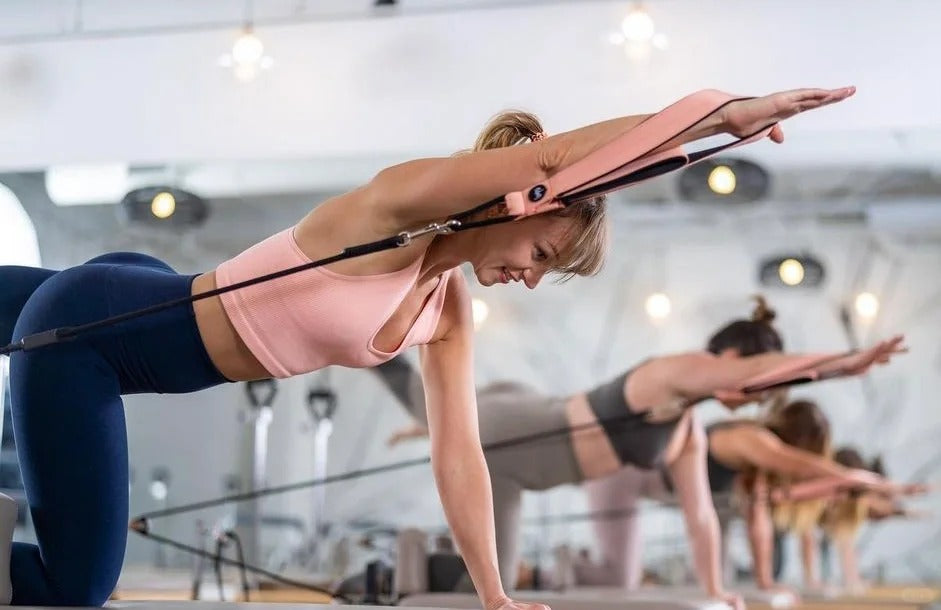
Pilates is more than just exercise. It is a practice of awareness, control, and refined movement. It teaches us to connect the mind and body in a way that feels almost artistic, like listening to music, appreciating a painting, moving through dance, or reading poetry. The beauty of Pilates lies not only in how the body moves, but in how deeply we learn to feel it.
What makes Pilates unique is that it is an intelligent form of movement. Before the body performs, the mind must first create the space for it. Pilates begins with awareness, imagination, and intention. Only then does the body follow. In this sense, Pilates is often described as “a movement practice where the mind guides the body.”
Unlike workouts that focus only on intensity or exhaustion, Pilates asks for something different: precision, patience, and attention. It is not a rushed practice. It requires you to slow down, stay present, and move with purpose. That is why Pilates is not just about exercise technique, but about understanding the principles of human movement itself.
Some people compare different types of fitness to different kinds of drinks. Those who love HIIT may be like people who enjoy strong liquor—intense, bold, and immediate. Yoga lovers may be more like beer drinkers—easy, steady, and calming. Pilates practitioners, however, are often like those who appreciate red wine: thoughtful, refined, and deeply aware of quality, detail, and experience.
Another reason Pilates stands out is its versatility. With the support of equipment, a movement can become more accessible for beginners, yet far more challenging for advanced practitioners. This is one of the great strengths of Pilates: it meets you where you are, while continuously inviting your body and mind to progress.
Pilates also teaches us that the practice does not begin and end on the reformer or mat. Whether you are sitting, standing, or lying down, the moment you think about lengthening through your center line, you are already practicing Pilates. It becomes a way of moving through daily life with more awareness, more alignment, and more control.
As Romana Kryzanowska beautifully described Pilates, it is “stretching with strength and control.” And of these, control may be the most important, because control makes us think. It brings intention to movement and transforms exercise into a mindful, deeply connected experience.
Perhaps one of the most remarkable things about Pilates is that it is suitable for nearly everyone. It is a low-impact, high-intensity form of exercise that can be adapted for different ages, fitness levels, and physical conditions. For those looking to improve posture, build long and lean muscle tone, and create more precise body shaping, Pilates is both safe and effective. It is especially beneficial for people with weaker joints or muscles, or for those who have strength but lack control and stability.
In the end, Pilates is not simply about how the body looks. It is about how the body feels, functions, and moves with intelligence. It is strength with elegance, challenge with awareness, and discipline with beauty.
Pilates is, truly, the art of controlling the body.
Share:
After 10 Reformer Pilates Classes: Is It Really Worth the Hype?
How to Choose the Right Pilates Reformer for Your Home Studio